Wednesday, July 24, 2013

my favorite lessons 4: winning up a pawn

        I stole this from an endgame book, I'm sorry I don't remember which one. The idea is to give students a roadmap for how to win a simple minor piece endgame when they're up a pawn. Obviously, this is not so simple, and so your objective is not that they win 100% of the time, or even 75% or any particular % of the time, but more that they have an idea of the method and get some practice at it.
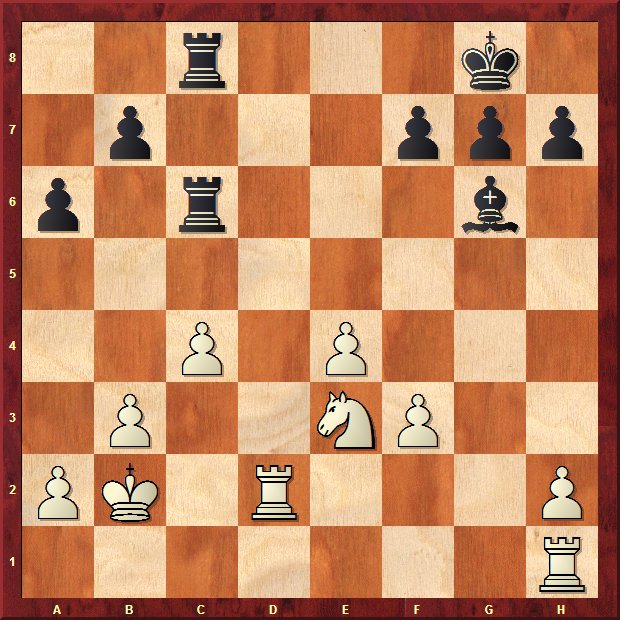
      I start by showing them a position
 
 
having a student tell me the material, and asking who thinks they could win this as white. (it doesn't matter what the answer is). I then ask who can explain to me what the plan is.
The plan is this:
1. Centralize the king (I explain that you activate pieces in the endgame in the order of their power, i.e. queen first, then rook, the king is worth 4, so king next, then bishops and knights, and generally only after these pieces are activated do you start pushing the pawns.)
2. Activate the knight
3. Make a passed pawn by pushing the pawns on the side you have a majority.
4. Once you've done that, the side with the extra pawn usually wins by some combination of:
   a) pushing the passed pawn and invading with the king
   b) trading knights
   c) sacrificing the passed pawn to win the kingside pawns.
Make sure this is written on the board so students can refer to it later while they are playing.
 
I then ask for a volunteer to start white out by doing #1, centralizing the king. I move for black, and we play through the following moves:
 
1.Kf1 Ke7
2.Ke2 Kd6
3.Kd3 Kc5
 
I then ask for another volunteer to take over and activate the knight:
 
4.Nc2 Nd5
 
I ask what this threatens (Nf4+ winning a pawn) and how white can stop this:
 
5.g3 a5
 
Here I ask which pawn to push first, and if they don't know, remind them of the general rule that you push the potential passed pawn first, in this case the b pawn:
 
6.b3 f5
7.a3 g6

8.b4+ axb4
9.axb4+
 
At this point, you've completed step three, and I explain that you now try to advanced the pawn and be on the lookout for tactics that allow you to sneak in with your pieces, or trade knights. In general, you calculate as much as you can. Depending on the level of the class, I go faster or slower through the rest of the game: the exact moves don't matter as much as the kids grasping the basic plan in the beginning. You won't be able to teach technique and endgame control in one lecture-lesson, so don't try too hard.
 
9....Kd6 [9...Nxb4+ This is a nice example of how white wins fairly easily if black allows the knights to be traded. 10.Nxb4 Kxb4 11.Kd4 Kb3 12.f4 Kc2 13.Ke5 Kd3 14.Kf6 Ke3 15.Kg7 Kf3 16.Kxh7 Kg2 17.Kxg6 Kxh2 18.Kxf5 Kxg3 19.Kg5]
10.Kd4 Nc7
11.f4 Nb5+
12.Kc4 Nc7
13.Ne3 [also good is 13.b5 Nxb5 14.Kxb5 Kd5 15.Ne1 Ke4]
13...Kc6
14.Kd4 Kd6
15.Nc4+ Kc6 [15...Ke6 16.Kc5 (16.Ne5 Kd6 17.Nf7+ Ke7 18.Ng5 h6 19.Nf3 Kf6 20.Kc5) ]
16.Ke5 Kb5
17.Ne3 Na6 [17...Kxb4 18.Nd5+]
18.Nd5 Kc4
19.Nf6 h5
20.Nd5 Nb8
21.Ne7 Kxb4
22.Nxg6
 
At this point, I reset the position and ask a student to repeat the general plan. Then students choose a partner, set up the position on their own boards, and practice playing the position as white and as black. Ideally, they should play twice, once with each color, and should have 10-15 minutes per side, although you can do it with 5 minutes each if you are pressed for time. Do remind them that playing an endgame with 5 minutes is not at all the same as playing a whole game with 5 minutes, and they should play slowly and thoughtfully as the position is tricky.  
 
the next day....
I follow that lesson with its sister position:
 
which you will notice is exactly the same, but with bishops instead of knights. I ask students again how many think they would win the position, and hopefully a few more students raise their hands than last time.
     I then ask what the basic plan is, and of course its essentially the same:
1. Centralize the king
2. Activate the bishop
3. Make a passed pawn by pushing the pawns on the side you have a majority.
4. Once you've done that, the side with the extra pawn usually wins by some combination of:
   a) pushing the passed pawn and invading with the king
   b) trading bishops
   c) sacrificing the passed pawn to win the kingside pawns.
 
I again show students a model game; you can also have them play first and show them the game afterwards, but I find with difficult lessons like this, many classes benefit from as much teacher-modeling as possible before they do it themselves. They play much better and are more likely to be successful if they see exactly how you do it first.
 
I ask for a volunteer to help me do step 1:
1.Kf1 Kf8
2.Ke2 Ke7
3.Kd3 Kd7
4.Kc4 Kc6

then a new volunteer for step 2:
5.Bc3 g6

and again a different student for step 3:
6.b4 Bb6 7.f3 Bc7 8.a4 Bb6
9.Bd4 Bc7
10.b5+ axb5+
11.axb5+ Kb7

and again, don't get too worried about covering every detail of the rest: like every endgame it gets a little messy and there are many possibilities for each side. What's below are just examples!

12.Kd5 Bb8 [12...Bf4 13.Be5 Be3 14.Kd6 Kb6 15.Ke7]
13.Bf2 [also good are 13.b6 Bg3; and 13.Be5 Ba7 14.Kd6 Bb8+ 15.Kd5 Ba7, which at first looks like repetition, but white invades after 16. Bg7 h5 17. Ke5]
13...Bc7
14.g3 h5
15.h4 Bb8
16.b6 Kc8
17.Kc6 Be5
18.b7+ Kb8
19.f4 Bf6
20.Ba7+ Kxa7
21.Kc7 Bd8+
22.Kc8

Now again, return to the original position, have a student repeat the basic plan, and send the class off to practice. Circulate and watch: the most important thing is to catch players who aren't following the basic plan. Don't worry too much about showing kids every forced win that they miss: it's a difficult position and you don't want to undermine their confidence. Keep in mind that your goal here is to give students a basic plan to follow, not to police their endgame technique.


Tuesday, July 2, 2013

favorite lessons part 3: threats

       The idea and first position for this lesson is taken directly from Jeff Coakley's excellent book "Winning Chess Strategy for Kids." Most of my favorite lessons are stolen from Coakley's books, and let me say now that if you're a chess teacher and you don't have all his books, you should stop reading this right now and order them. They're all you'll ever need, I promise.
    That said, I start the lesson (as he suggests) with a general discussion of what a threat is: how in real life, a threat is bad ("I'm going to beat you up after school," "I'm going to tell," etc.) but in chess, a threat is great ("I'm going to take your piece") because it gives you a chance to be winning next move. The more threats you make, the more chances you give your opponent to make a mistake, and the more chances you will get an advantage.
      In chess, a threat has to be specific, so when I ask "what's the threat?" I am really asking "Where are going going to move next turn?" and you should give me a specific answer, like Qxg7, rather than a vague answer, like "checkmate." For a threat to work in either real life or chess, it has to be something that the other guy is actually scared of. So if I say "I'm going to give you a piece of cake," that isn't a threat, and neither is threatening to play QxP if they can just recapture your queen.
    Here's Coakley's position:

    He talks about the following threats:
  • 1. Be3, threatening to take the black queen.
  • 1. Bd6, threatening to win the exchange
  • 1. Qg2, threatening Qxg7#
  • 1. Qd2, threatening the sacrifice 2. Bxh6
and then more complex threats like
  • 1. Be5, threatening to double black's pawns
  • 1. Qe3, threatening to trade queens, since white is up material 
Obviously, you shouldn't just tell the kids this, you should ask them to find the threats. I like to show this position as an example, and then do a couple more, usually one opening position and one endgame. For example:


Threats include:
  • 1. Bg5, threatening the queen;
  • 1. Qa4, threatening the knight for a second time (a good opportunity to review counting attackers and defenders);
  • 1. d4, threatening both to win the e5 pawn, and to play 2. d5, threatening (also winning) the knight (a good opportunity to review pins)
  • 1. Ng5, threatening to take on f7 with the queen or knight (ask which threat is more dangerous). This can lead to an interesting discussion about how to follow up after 1...Nh6 or 1...Qd7. (2. f4 is a logical idea, as are 2. a5 and 2. Bc4)
  • 1. a5 threatening both 2. a6, winning the knight by attacking the bishop, and to a lesser extent 2. axb6, threatening to make black's queenside pawns into targets.
It's also good to talk here about how it's trickier to make less obvious threats, i.e. everyone will see that 1. Bg5 threatens the queen, but 1. d4 and 1. a5 are harder.

Threats include
  • 1. Rhd1, threatening 2. Rd8 with backrank mate
  • 1. h4, threatening to trap the bishop with 2. h5
  • 1. Nd5, threatening a fork with 2. Ne7+
  • 1. Rd7, threatening to take on b7.
Tell students that in their games, they need to try to make as many threats as possible, and to show you when they make a good one. Write down the position in the best student example and use it as a review at the very end of class or the beginning of the following one.

Sunday, June 30, 2013

my favorite lessons, part two: choosing the best capture

Choosing the Best Capture 
level: absolute beginner
format: large group lesson
time: 15 minutes

     I do this lesson as part of teaching how the pieces move. I normally teach the pawn first, then the rook, bishop, and queen, then the knight, then the king. (this is assuming 43 minute periods and 6th graders). After teaching the pawn, they play the pawn game. After teaching the rook bishop, and queen, they play a capturing game involving those three pieces plus the pawns, starting in their normal positions. I teach piece values simultaneously, and the objective of the game is to take more points than your opponent does.
     If you were going to slow it down, I would teach just the queen in the second lesson, and have the kids play the excellent game Pawns vs Queen, (starting from normal positions, but with the d2 pawn advanced to d3). In this game, the black queen wins if she captures all the pawns; the white pawns win if one gets to the eighth rank, even if the pawn can immediately be captures upon doing so. This fantastic game teaches concepts like the double attack by the queen, advancing the pawns together to defend each other, and how much more dangerous the furthest advanced pawn is.
     But when I teach the three pieces, rook bishop, queen, together, we practice their movement and captures by talking about which captures are best. This is really a bread and butter skill of chess, as capturing your opponent's pieces in the best possible way is 75% of playing well, and like all important skills, it needs to be taught explicitly.
     Consider the following position, removing the kings (chessbase won't let me save a position without them, but of course the kids have not learned the king yet).


The white queen can capture most of the pieces. I ask which black piece can the queen not capture.
I explain that the best capture is the one where you get the most points, and don't get recaptured. I then ask the kids to explain which pieces are protected, and how. I ask which pieces are not protected, and ask them to figure out which capture gets you the most points.
    Often my second lesson takes a little longer than I would like, because I have a lot to do in it (reviewing the pawn, teaching three pieces, piece value, how to set the 4 pieces up, modeling 5 moves practice of the game they are going to play on the demo board, letting the kids play, and then showing them how to figure out who won at the end). If you feel rushed, this lesson also works very well as the review of R, B, Q, P movement at the beginning of lesson 3.
    I do the same kind of thing after teaching the knight, for example:


Again, I ask which piece cannot be captured. Then I ask the students to talk through which pieces are defended and how, as well as how much each is worth. This gives us a chance to talk about how it's worth taking the defended queen over the free rook.
    Finally an example from "real chess"


And here you can compare Rxd8 with Qxa8, and depending on your class and time situation, maybe someone will point out that while Qxa8 looks better in isolation, you could have the best of both worlds by taking on d8 first and then taking on a8.
   

Friday, June 28, 2013

my (10-15) favorite lessons, part 1

Hello Blog Readers!
    Later this summer, I am doing a professional development for my friend Sean at Success Academy, and possibly also for some school in Canada, and one component I was envisioning was a couple of hours of "My Favorite Lessons" delivered at high speed. Some no-prep, easy-set-up, time-tested, pull-out-when-you-have-no idea-what-to-do-today guaranteed-success lessons.
   
    So to motivate myself to prepare them ahead of time, I thought I would share them with you.
    Here's the first:

Mate in 5
   This lesson teaches mating patterns, planning, piece coordination, and creativity.  It can be done as a large group lesson, in small groups or pairs, or as homework. It's good for multi-level classrooms, since it exposes beginners to a lot of checkmate practice, while advanced students can be given paper and pencil and asked to list as many solutions as they can find.
    In the position below, explain that white gets 5 moves in a row, while black doesn't get to move. Students are asked to find as many checkmates as possible.


Usually, you get a flood of answers at first, which then slows down. Depending on what they have found/not found, I then ask leading questions like
"You found a lot of checkmates on h7. Can you find some on g7?"
"Can you find a checkmate with a queen and bishop? Queen and knight? Queen and pawn?"
"Can you find a checkmate with two knights?" (This is also the only mate in 4 in the position)
"Can you find a checkmate using a bishop and pawn (or) using a pawn promotion?"


A Swedish visitor, Jesper Hall, showed me that lesson a few years ago, and it always works like a charm.

In other news, the pregnancy is going ok. It's getting a little annoying, lumbering around, having to hold on to stair railings, unable to lift even moderately heavy things or drink wine, but overall it's not so bad.
     I'm endlessly amused by the baby kicking me.
     I'm also having very vivid dreams, which is fun.
     Strangers are all extremely nice to me. People smile at me on the street, and let me go first. Everyone talks to me, wants to know my due date, and seems impressed it's a boy. I always get offered a seat on the subway (the hands-down winner of offering the seat? Chinese males age 18-30. They get up 100% of the time.)
     Here is a funny ultrasound picture (not mine):


see the cat?

   In non baby news, we moved up to the top two floors of our house (unbelievable how much space there is) and are remodeling it. Remodeling is fun, like playing design-your-fantasy-house, only for real. Here is the bathroom floor tile I picked out:
 and here is our kitchen backsplash:
Fun fun fun!

Also, Jonathan bought the largest fridge I have ever seen, and it dispenses water and ice from the door! I live in the lap of luxury! (or I will soon, when it's delivered).

      I've been reading a lot, because I spend a lot of time lying around. In the last month, I finished:
How We Do Harm: A Doctor Breaks Ranks About Being Sick in America (Otis Brawley)
The Circumcision Decision: An Unbiased Guide for Parents (Lorna Greenberg, Susan Terkel)
A World of Hurt: Fixing Pain Medicine's Biggest Mistake (Barry Meier)
The Norm Chronicles: Stories and Numbers About Danger (Michael Blastland)
We Need to Talk About Kevin (Lionel Shriver)
Ninety Days: A Memoir of Recovery (Bill Clegg)
Battle Hymn of the Tiger Mother (Amy Chua)
The Spark: A Mother's Story of Nurturing Genius (Kristine Bartlett)
The Real North Korea: Life and Politics in the Failed State (Andrei Lankov)
Escape from Camp 14: One Man's Remarkable Odyssey (Blaine Harden)
Bringing Up Bebe: One American Mother Discovers the Wisdom of French Parenting (Pamela Druckerman)

They were all pretty-to-very-good, or I wouldn't have finished them. Except The Norm Chronicles, which was recommended in the Economist, disappointed me.

    That's all I have for you this evening. Hopefully I will blog 10-15 times in the next few weeks with brilliant lesson ideas for you. Also, I'll be attending the upcoming US Chess School and will take photos.


Saturday, April 27, 2013

pictures from girls nationals


Nancy

Shanniah

Haby

Mengnan
 

Edeli

Darrian Robinson, once a 318 player and now a freshman at U Chicago, chats with Chicago Mayor Rahm Emmanuel. Darrian has a White House internship for the summer with Valerie Jarrett. (!)

 
I woke up at 5, walked through downtown Chicago and took some pictures:
 
a flower behind a flower


construction


note the NBC peacock
 

Monday, April 22, 2013

depressing complaining rant

I'm not doing so great on the blogging, I know.
I'm doing a lot of packing, as we are moving upstairs on May 1. Upstairs is twice as big as downstairs (2 floors), so we'll have room for baby, and for Helpful Mother-in-Law. Also our windows won't be at street level, so we can keep the blinds open and have lots of light.

Work is really getting me down. Every morning I try to talk Jonathan into playing hooky with me and spending the day at the beach. Even today when it's 50 degrees out. He always says no because he's way more responsible than I am.

I did my 3rd quarter grades today and it made me unreasonably angry. Our grades are all online throughout the year, so parents and kids can see their grades in every subject at all times. I give a few kinds of homework, but one standard weekly assignment in my advanced classes is 25 correct chesstempo.com problems every week. It's due Thursday; I check every Friday morning. Late problems get only half credit. It's fine to do them in advance, and the exact number of completed correct problems each kid needs to have for each Friday is written in a note to each week's assignment.

If you haven't experienced chesstempo.com, I use the site because it's free and it adjusts to each student's level. If you get a problem wrong, your rating goes down, and you are "paired" with an easier problem next. I make all my students start their handle with IS318, so it's relatively easy to check. I explain to them that working at these problems is one of the fastest ways to get better at chess.

I explain it's like going running: they have to work at it. I use the example that a runner could just get in a car and drive for five miles but say he went running, and people might believe him that time, but when the real race comes he's still going to be fat and out of shape. I say that chess is hard and you won't get better if you aren't willing to work and wrestle with the hard problems that aren't obvious to you right away.

So what happens? A significant percent of students just stop doing the assignment and fail my class as a consequence, despite weekly verbal and email reminders, even though they and their parents can see their grade decline each week. Even though they could sit down and do two hours of work at the beginning of each quarter and get an automatic 100 and never think about it again for 2 months.

Almost all of the kids do the problems by guessing as fast as possible, spending 10-15 seconds maximum because they know they will get an easier problem if they are wrong. Some of them go into settings and change the level from normal to easy, so each problem is a mate in 1, or its equivalent. Their ratings are generally 400-600 points lower than their actual ratings.

I gave all the nationals kids a tactics packet of harder problems to do in their week and a half spring break before nationals. I email the kids and their parents reminders to do the packet. More than half the kids don't do more than the first page. The ones who do more mostly just do the easiest problems, and write nonsense for the hard problems or write "castles" for every single answer. The best ones use Fritz to cheat, and I'm almost grateful that they even bothered. (I can tell the cheaters because if I take away their papers, they have no idea of any of the answers.)

I make online multiple choice quizzes, 10-20 diagrams each, for my students to test if they learned their openings. Each quiz has a practice module with exactly the same questions as the real test. You can do the practice as many times as you need to before taking the test, so you are practically guaranteed to get 100. A quarter of the students don't bother to take the test in the first place. Another quarter can't be bothered to do the practice, even though it gives you all the answers ahead of time, so they fail anyway.

Ten percent of my early morning students don't show up on any given day, and another ten percent are late almost every day.

Half the kids who sign up for a tournament don't show up, even though their $50 entry is donated by the tournament organizer. On Monday, they tell me they forgot or they didn't feel like going.

Parents complain all the time that I give too much work, that I should not penalize their child for late work, that I should not mark their child absent or late when they are not in class, and that I should not take points off homework for answers that don't make sense. Of course not all parents, and not all kids either. I have some amazing, hard-working students and some supportive, caring parents. Just not too many, and it feels like not as many as I used to.

I have the kids write reflections after nationals. One of the questions is "What would you do differently next Nationals to play better?" and almost every kid writes about being exhausted. On the next question, half of them describe the best part of the tournament as staying up all night Saturday night.

I know they are just kids, and I know as people get older they forget what it was like to be young and projct their adult selves backward in time, but I feel increasingly like having high expectations is beating my head into a wall for no reason at all.


I look at the advanced entries yesterday for this weekend's Girls Nationals, and notice what a great U12 team Weibel has. That leads me to look at their website, and I find their list of instructors:

Uyanga Byambaa   Originally from Mongolia, a FIDE Women's Master, 2nd year at Weibel

Ted Castro    Expert rated player, trainer & coach of numerous young chess champions, runs the NorCal House of Chess. 8th year at Weibel

Barry Curto  Correspondence Chess Master, A player, taught for many years for Success Chess, first year at Weibel

Ricardo De Guzman  Originally from the Philippines, International Master, 9th year at Weibel

Hailey Deaton Ohlone College student, taught Raw Beginners at Weibel last year, returning this year

Demetrius Goins Expert rated player, moving closer to Master every tournament he plays, 3rd year at Weibel

Arpita Khandelwal Mother of Weibel student, substitute at Weibel Chess last year, taught for Success Chess,first year full-time at Weibel

Alan Kirshner  Started Weibel Chess 24 years ago, claim to fame--he is still around

David Lee Has tutored many successful chess players, taught for Berekley Chess School, third year at Weibel

Elizabeth Livesay Ohlone College student, taught Raw Beginners at Weibel last year, returning this year

Hayk Manvelyan Originally from Armenia, became a Chess Master while at Mission San Jose High School, replacement last year, full-time this year

Kevin Mc Cue Works at Ohlone College in Biology Lab, active with chess there, 4th year at Weibel

Gaurang Mehta Originally from India where he ran a successful chess school, FIDE Chess Expert, 5th year at Weibel

Richard Shorman  Arguably the best known chess instructor in the Bay Area for near 50 years, wrote a chess column for  Daily Review, 13 years at Weibel


Don't get me wrong: I think it's awesome that other programs are so well-developed and well-staffed, it's fabulous for chess generally and for those kids in particular. I know I probably sound like a bitchy self-pitying complainer, but man, how is it possible for me to compete with that? When I can't even get my kids to complete a tactics packet and show up?  I guess it's the right time for me to have a baby/take some time off/ pull back a little from being so obsessed with work.

Saturday, April 13, 2013

How Sebastian Succeeded + Investment Banking

Chapter Three, "How to Think," of Paul Tough's recent best seller starts with me going over the game of Sebastian Garcia, a sixth grader at his first nationals, playing in the Under 750 section. He plays quickly and poorly, and I pretty much tell him that.

Fast forward two years to last week, when he ties for 3rd (4th on tiebreaks) in the Under 1250 section with 6/7. Well done, Sebastian!

 
In other news, Patrick Masucci from DiscoverPoint Capital and Winston Bowen from Citigroup came to 318 to make a interactive powerpoint presentation to chess students (and assorted others) about investment banking, what it is, what it's like, and how to pursue a career in the field.


Thanks, Pat and Winston!

Tuesday, April 2, 2013

hurray!

I'm pregnant! hurray! I don't know if it's a boy or a girl yet, but obviously will find out ASAP. I don't understand people who "want it to be a surprise." I feel like giving birth will be surprising and momentous on its own without needing any extras. Also, I hate waiting. I have a little belly already, but luckily most of my clothes are 2 sizes too big, so it's not obvious/uncomfortable yet.

I'm due Oct 27. I'm planning to take off from October-February, and then Jonathan will stay home from February-June. It's a big advantage of having basically the same job (shop teacher): we're programmatically interchangeable.

The only downside is that I'm having some complications, so I'm forbidden from traveling for 3 more weeks, which means no supernationals for me. I'm pretty bummed about that, as I usually find nationals both professionally exhilarating and the social highlight of my year. Also, I'm extremely worried the kids will all play superfast without me there to yell at them, but probably I overestimate myself. I will obviously be glued to the results page all weekend.

One of my students, Haby, wrote this extremely touching facebook wall post for me, which made me feel pretty fabulous:
"This upcoming Tuesday our chess team will be traveling to Nashville to compete against the nation
You have put time and effort to help us grow and so that we can become champions, and so this time we are playing for YOU !
Every point made by a 318 player is one more appreciation we have for you."


I haven't felt very nauseous, just insanely tired all the time. I get up and feel fine, then by the time I've showered and dressed, I'm ready to crawl back into bed. But compared to IVF, which made me feel like a Soviet psychiatric patient, pregnancy has been a walk in the park. I obviously miss sushi, wine, running, and one or two other things, but I guess it's good to relearn some self-control. I've also started eating organic food, using phlalate and paraben-free soap and shampoo, not eating canned food or using plastic containers, and (my favorite) never, ever touching receipts (last three = BPA). Jonathan has taken over all (literally all) of the housework, claiming my job is only to sleep, which is angelic of him. And I hear the second trimester is the most fun, so I'm looking forward to that.

In other news, I took some kids on a fun field trip to American Express headquarters to mentally prepare them all for lucrative careers in finance.

I've read some great books, the best of which was Bad Pharma: How Drug Companies Mislead Doctors and Harm Patients. My father is a doctor (actually was; now he's a celebrated chess teacher) and he always used to say it's ridiculous how many people take cholesterol-lowering drugs, as they haven't been proven to affect any real outcomes, and I used to dismiss that, but now I see he is completely correct. He also told me a story about how he published an article about the side effects of a Pfizer drug, which resulted in Pzifer sending two goons to threaten him if he didn't retract the article and he had to call hospital security.

a few recent photos of IS 318 players:
Edeli

Lennin, William, Sean

Brian

Rashad

Brian and Vincente

Friday, March 22, 2013

I'm back!

I've decided to try blogging again! I got a bit busy there, but spring break is starting, nationals is almost upon us, and I'm hoping to make a bit more time for myself soon. (more about that later!)

 First of all, the only bracket I could ever love, from the census department!

A fun article about IS 318, Brooklyn Castle, and me!

Nationals... can I say I hate supernationals? Mostly because I hate enormous crowds of people and waiting in line for food.

We have a uphill battle in the K-8. Canyon Vista has a 2 1900s, an 1800, 2 1700s, and Masterman has a 2000, a 1900, and 2 1800s. We have 2 1900s and 6 1700s. The nice thing is that if we lose, my good friends Greg or Mike win.

I'm a little more optimistic about the K-6, where we have 2 1600s and 6 1500s. I'm not too sure who our main competition is, but my sixth graders are pretty good.

We're also competing in the high school under 1600, the k-9 under 1250, and we have teams in the under 1000 and under 750, but I think those lower sections are all rigged and unwinnable anyway. I strongly believe the USCF should be checking the rating history of all winners, team and individual, in these under sections. Some very fishy things go on.

more soon!

Thursday, February 21, 2013

rare chess books for sale


The estate of the late Fred Snitzer has donated some very old and valuable books to IS 318, and we are looking to sell them. Titles include:
  • Jaenisch's Chess Preceptor: A New Analysis of the Openings of Games (1847)
  • A Treatise on the Game of Chess Containing a Regular System of Attack and Defense J. H. Sarratt (1822)
  • A New Treatise on the Game of Chess J. H. Sarratt (1821)
  • Studies of Chess; containing Caissa, A Poem by Sir William Jones A Systematic Introduction to the Game and the Whole Analysis of Chess composed by Mr. A. D. Philador (two volumes) 1803
  • A Selection of Fifty Games from Those Played by the Automaton Chess player (1820)
  • The Incomparable Game of Chess J. S. Bingham (1820)
  • Practical Chess Grammar W. S. Kenny (1818)
  • A Selection of Games of Chess Played at the Westminister Chess Club between Mnsr. L. C de la Bourdonnais and an English Amateur of First Rate Skill W. Lewis (18350
  • Paul Morphy the Chess Champion (1859)
  • Encyclopedia des Echecs A. Alexander (1837) 
I believe all the above are first editions and in great shape. (I inspected 4-5, not all) The oldest ones have removable plastic covers to protect them. There are also better known titles like
  • Capablanca's My Chess Career
  • Reti's Masters of the Chessboard
  • Nimzowitsch's My System
also all first editions.
There are also complete sets of Chess Life and America Chess Bulletin, carefully preserved and dating back to the early 1900s. There are also some of Fedorowicz's old scoresheets from the 1970s!

You can view photos and photocopies of the books and their title pages here, as well as online  (AbeBooks) estimates of their value.

We'd also be grateful if anyone who knows something about chess books would be able to value them, and the estate is potentially willing to pay for a valuation.
 
All proceeds from the sale will go to supporting the IS 318 chess team.